
U.S. Retail: A Strategic Pillar in a Multidimensional Risk Environment
03th of March 2026
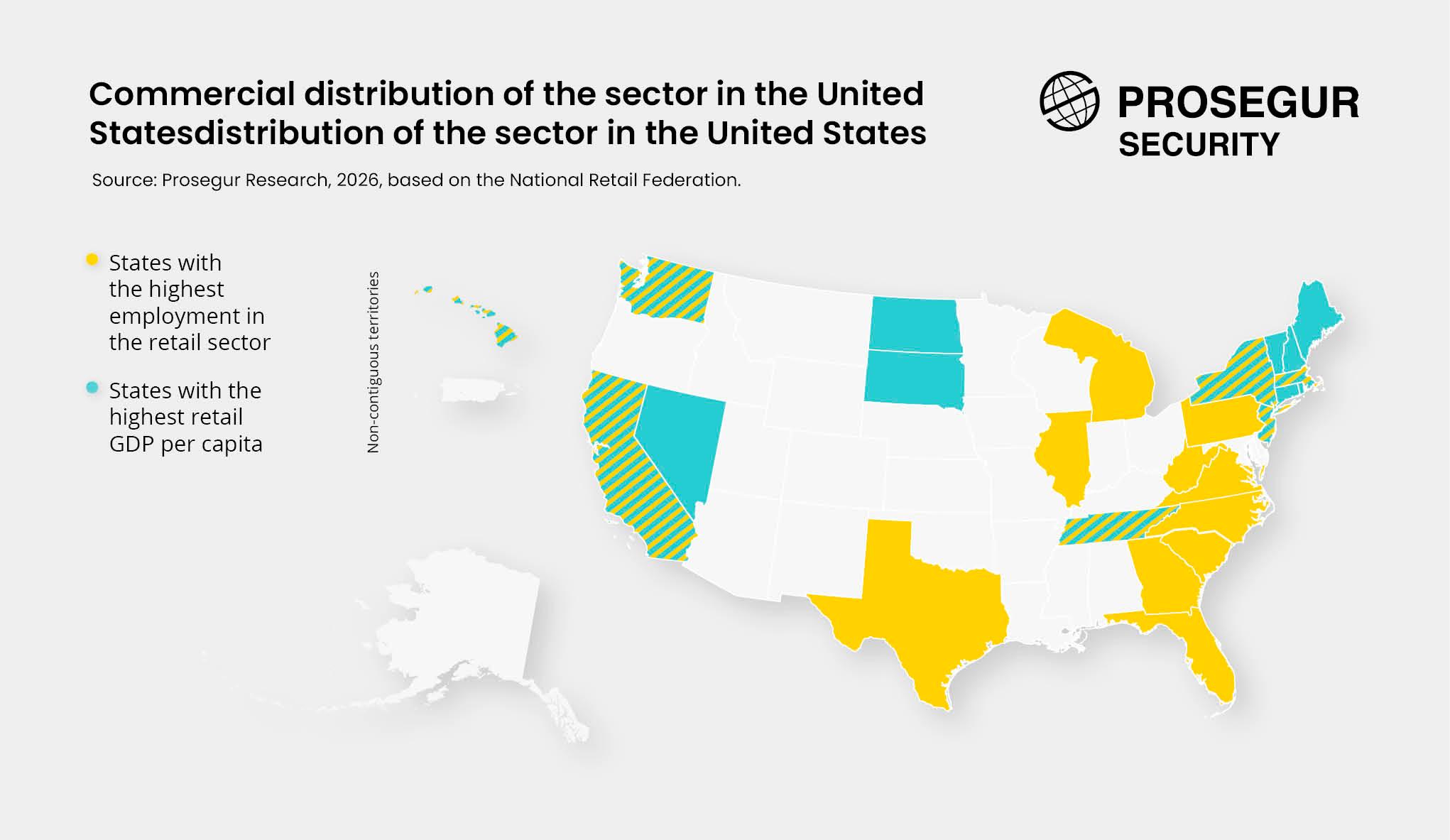
According to the National Retail Federation (NRF), the retail sector in the U.S. contributes $5.3 trillion to national GDP and includes around 55 million jobs. This makes it the sector with the highest number of private-sector jobs in the country.
In recent years, the U.S. retail ecosystem has ceased to be solely a commercial environment and has become a multidimensional risk scenario. Thus, the sector in the country is facing a systemic crisis that affects the sustainability of the business model and its social role as a provider of essential goods.
.jpg)
.jpg)
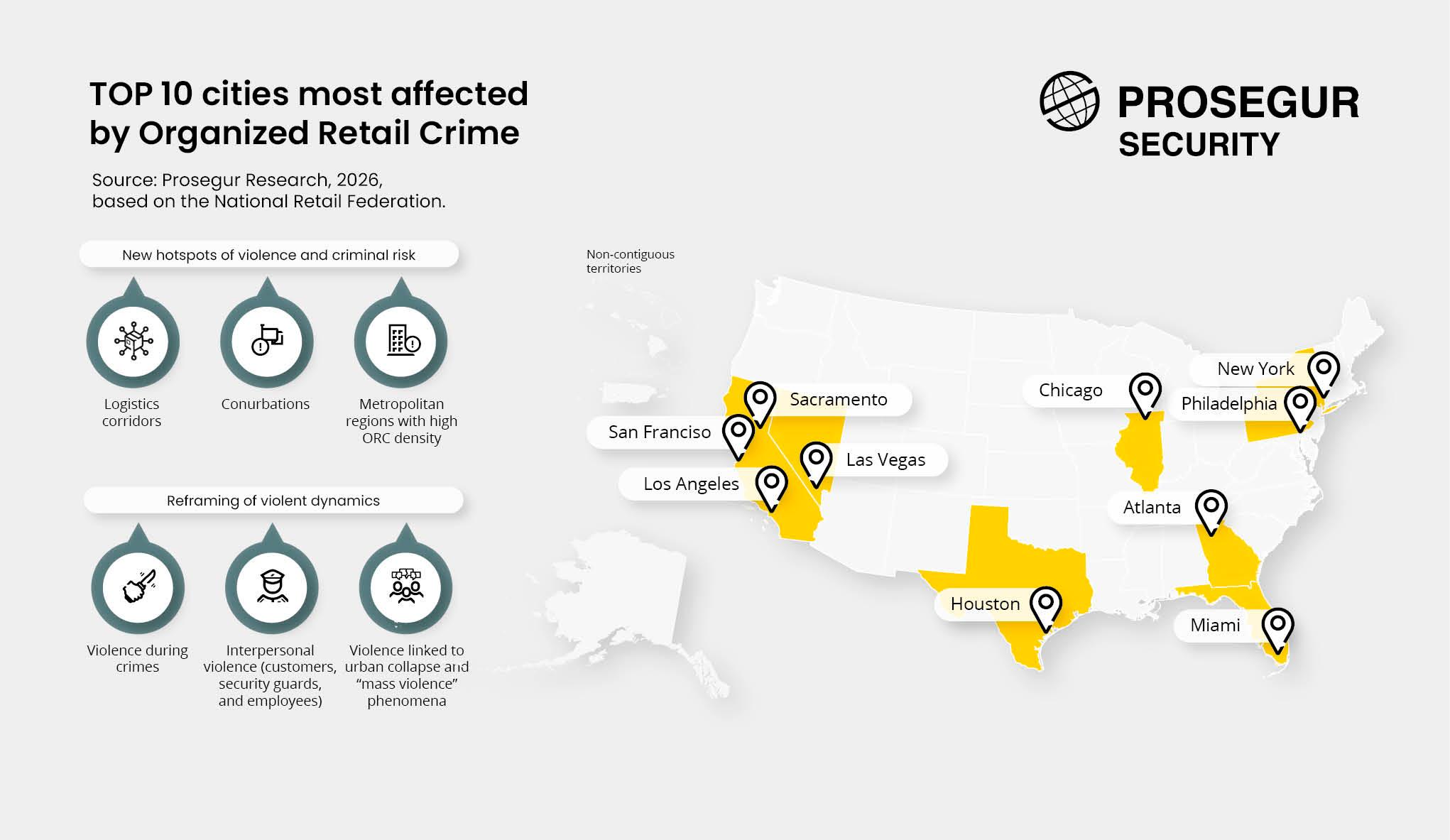
The concentration of large volumes of merchandise and cash, the combination of physical and digital channels, and a value chain structured around an extensive territorial network make retail an attractive and preferred target for organized crime.
In addition, a range of contextual factors may be added which—depending on the characteristics of the sector in a specific territory—act as a multiplier of its attractiveness to organized crime: broad inventory with low unit cost, availability of multiple channels or lenient return policies, among others.
Overall, the sector’s profile makes it a privileged channel for the deployment of organized crime’s illicit operations. Among these, while in-store theft is the most common, organized crime is linked to the sector primarily through activities such as extortion, money laundering or trade in fraudulent products.
Download the report

Related entries
.jpg)
Security Yearbook in Latin America

Computer Vision engineering: what machines can see