
The Era of Permanent Conflict: Navigating the Gray Zone
05th of June 2026
At Prosegur Research, we define hybrid threats as the set of hostile actions—whether planned or emerging—that result from the convergence and interaction of actors of different natures. These actions pursue multiple objectives (power, profit, influence, coercion, destabilization, or competitive advantage) and are carried out through the synchronized or sequential combination of heterogeneous means across multiple domains, with the aim of altering the behavior of an adversary or a population.
To achieve this, capabilities are degraded, legitimacy is eroded, and systemic vulnerabilities are exploited, generating cumulative impacts. Accordingly, hybrid threats are characterized by four main dimensions: convergence of actors, convergence of domains, convergence of objectives, and convergence of means and techniques.
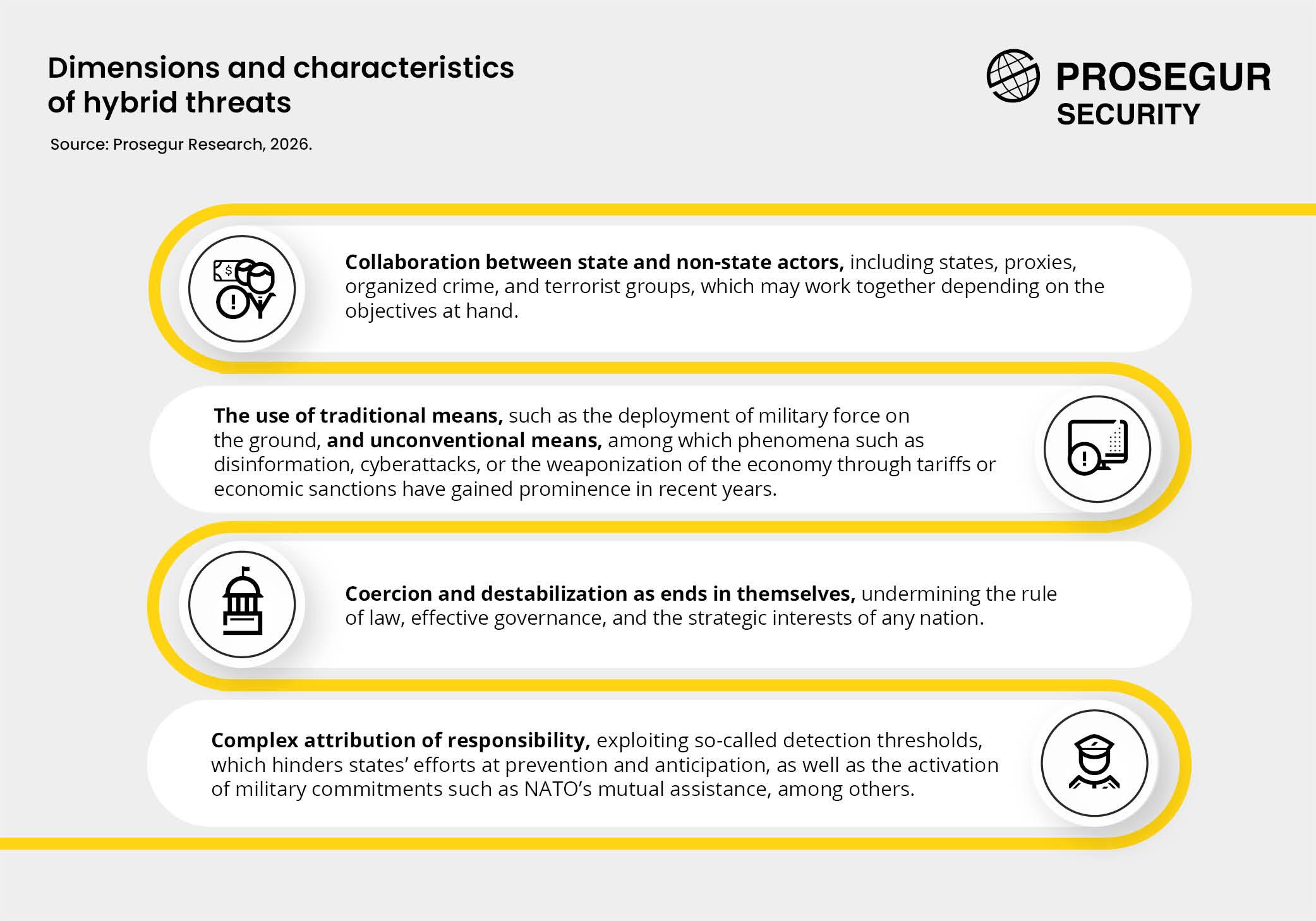
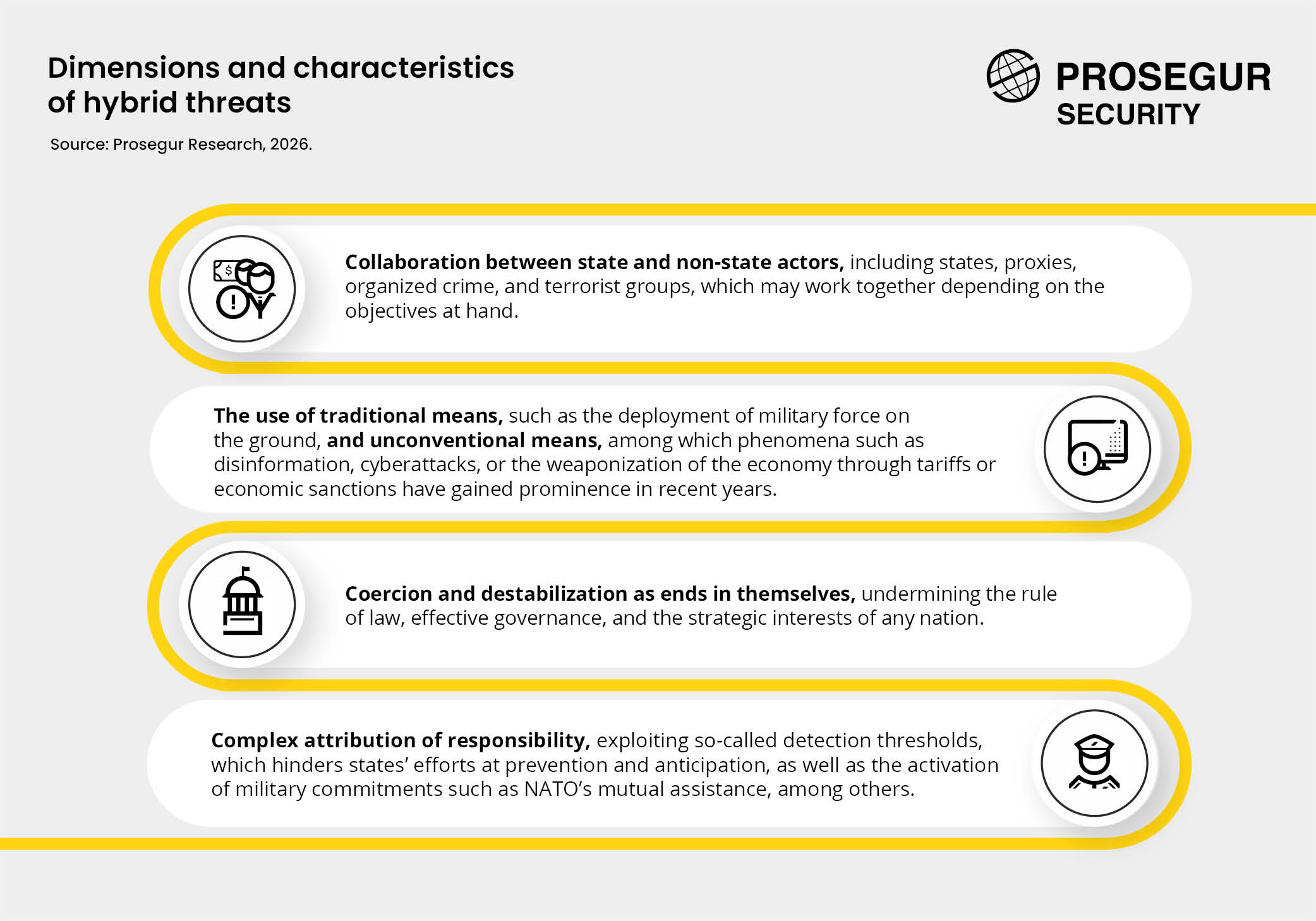


The two main aspects of hybrid conflicts and threats are both rooted in uncertainty. On the one hand, there has been a significant expansion in the deployment and use of a wide range of destabilization tactics. Traditional military assets such as tanks, for example, are now complemented by advances in drones, hypersonic missiles, and autonomous robotics. On the other hand, the attack surface of both nations and businesses has increased substantially.
In addition, hybrid threats are becoming increasingly relevant to the private sector. In fact, many critical infrastructures are managed by private companies or protected by private security services. Therefore, every organization should incorporate hybrid threats into its risk assessments and business continuity plans.
Download the report
Related articles

U.S. Retail: A Strategic Pillar in a Multidimensional Risk Environment
.jpg)
Security Yearbook in Latin America